Shame and Survival: What Survivors Carry
Shame and Survival: What Survivors Carry (and Why It Was Never Theirs)
Shame is one of the heaviest things a survivor can carry. It’s also one of the least understood by people who have never lived through abuse, exploitation, or violence.
Shame doesn’t just feel like sadness. It doesn’t just feel like regret. Shame tells a person: “Something is wrong with me.”
And when shame takes root, it can quietly shape how someone sees themselves, their relationships, their body, their worth, and their place in the world.
For many survivors, shame becomes a daily companion long after the harm has ended.
Why Survivors Feel Shame
Shame is not a natural outcome of being harmed. It is something that is placed on survivors, often intentionally.
Perpetrators rely on shame to maintain control. They may use threats, manipulation, coercion, and humiliation. They may convince a survivor that they “wanted it,” “deserved it,” or “caused it.” They may make it feel impossible to tell anyone. And even when no words are spoken, the message is still delivered: “If anyone finds out, you’ll be blamed.”
Survivors often learn quickly that the world can be unsafe. This is not only because of what happened, but because of what might happen if they speak.
Shame grows in silence.
And when people around a survivor respond with doubt, judgment, disbelief, or minimizing, then shame deepens. Sometimes the shame isn’t created by the survivor’s own thoughts at all. It’s reinforced by a culture that asks harmful questions like:
Why didn’t you leave?
Why didn’t you fight back?
Why didn’t you tell someone sooner?
Why did you go back?
These questions miss one crucial truth: Survival responses are not choices made from safety. They are adaptations made under threat.
What Shame Does to a Survivor’s Life
Shame doesn’t stay in one place. It seeps into everything.
It can show up as:
Feeling “dirty,” broken, or unlovable
Avoiding relationships, intimacy, or connection
Chronic self-blame and harsh self-talk
A need to “prove” worth through perfection, achievement, or over giving
Fear of being seen, known, or truly cared for
Difficulty trusting others or trusting oneself
Staying silent even when suffering deeply
For people looking in from the outside, shame can be confusing. It can make survivors appear distant, guarded, angry, or withdrawn. It can look like “not moving on.” It can even look like self-sabotage.
Beneath the surface it is a nervous system still trying to stay safe.
Because shame is not just emotional. It is physical. It lives in the body. It can make the chest tighten, the stomach drop, the throat close. It can make someone want to disappear.
Moving Through Shame
Survivors don’t heal shame by forcing it away. Shame loosens through safety, compassion, and truth. Particularly when truth is spoken out loud.
Here are a few things that help survivors move through shame:
1. Naming it
Shame thrives in secrecy. Naming it (“I feel ashamed”) can be the first crack in its power.
2. Understanding where it came from
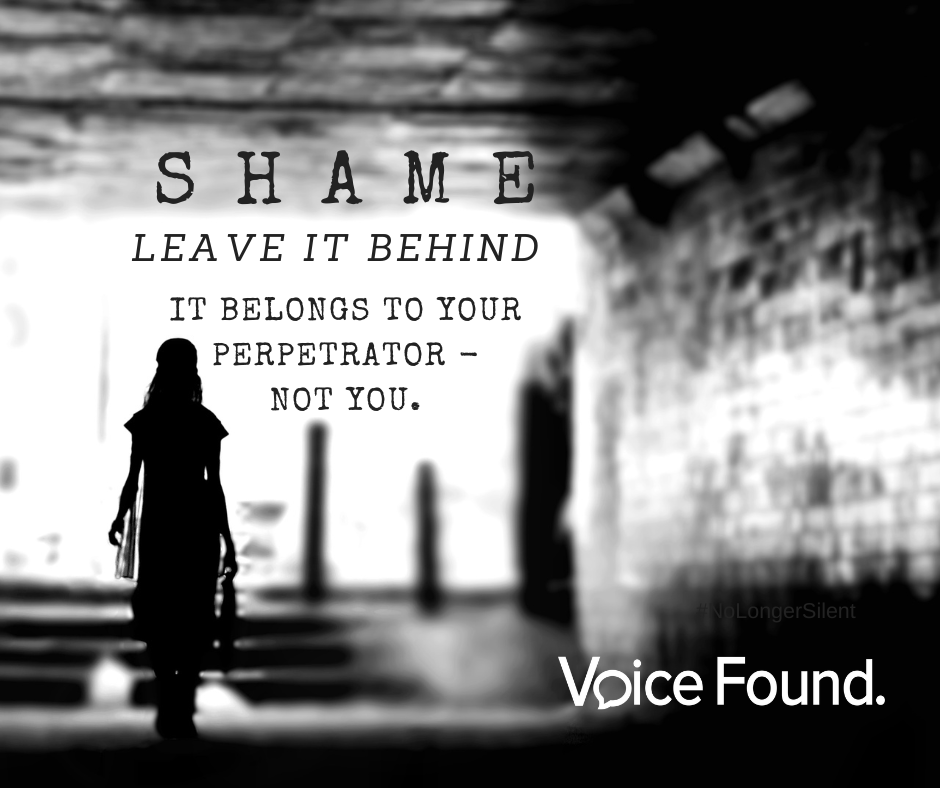
Shame belongs to the perpetrator, to the abuse, to the manipulation, or to the messages the survivor received afterward.
When survivors learn why they feel shame, it becomes easier to separate from it.
3. Being believed
Being met with “I believe you” and “It wasn’t your fault” can be life-changing. Belief helps rewrite the story shame has been telling.
4. Building connection
Safe relationships—peer support, counselling, survivor community, trusted friends—help survivors remember they are not alone.
5. Practicing self-compassion
Self-compassion isn’t pretending everything is fine. It’s offering kindness to the parts of ourselves that learned to survive in impossible circumstances.
What Survivors Need Others to Know
If you love someone who has survived harm, one of the most powerful things you can do is refuse to hand shame back to them.
You don’t need the perfect words. You just need steadiness.
You can say:
“I’m so sorry that happened to you.”
“It wasn’t your fault.”
“You don’t have to carry this alone.”
“I believe you.”
“I’m here. I’m not going anywhere.”
Because healing doesn’t come from being told to “move on.”
It comes from being met with dignity, patience, and respect.
A Final Truth
Shame may be something a survivor learned to carry but it was never theirs to begin with. It belongs to their perpetrator.
And every time a survivor is seen, heard, and believed then shame loses its grip.